Leading Process Solutions

Zero Liquid Discharge ZLD

Caring for the future

Sauberes Wasser – Unterwasseransicht, man blickt durch die Wasseroberfläche in den Himmel

Water is one of the most valuable resources on Earth. Global environmental awareness, the desire for sustainability, and the focus on conserving and protecting our water supplies are steadily resulting in more environmental regulations and stricter rules regarding the use and disposal of water in industry.

The machine solutions developed by SIEBTECHNIK TEMA for Zero Liquid Discharge (ZLD) projects are used in many industrial sectors to purify or recycle process water and to recover valuable substances from wastewater.

Download the full report

Sustainable resource saving

But demand for high-quality water is increasing, driven by ecological changes, environmental factors, the growing world population, and increasing urbanization. This fact has led to greater environmental awareness worldwide regarding the availability and quality of water. As a result, there are increasingly stringent government regulations regarding the disposal of industrial wastewater.

Due to scarce water resources, and rising costs for water treatment and wastewater disposal, the use and conservation of water is a key issue in the manufacturing industry around the world. The focus here is often on repeatedly using treated water and reducing wastewater volumes, and even on avoiding wastewater entirely. Demand for new and increasingly efficient recycling technologies is growing, especially in regions that have limited access to available water sources and wastewater disposal options.

Waldszene bei schönem Wetter – sauberes Wasser fließt durch einen klaren Bach – man sieht, warum Umweltschutz und Nachhaltigkeit so wichtige Themen sind.
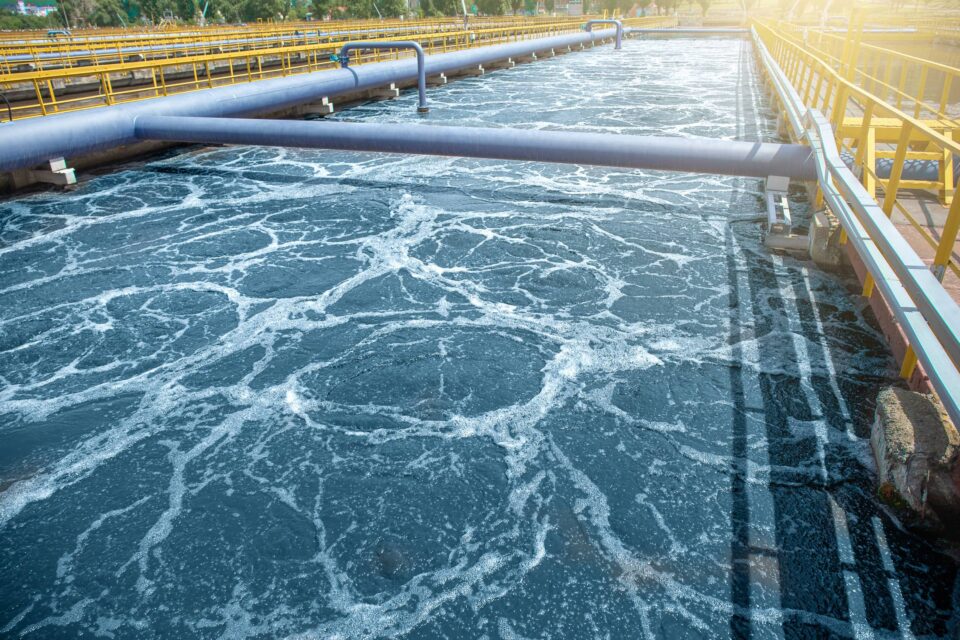
Kläranlage – Abwasser in einem Becken

The benefits of Zero Liquid Discharge (ZLD)

In order to increase the environmental friendliness of industrial plants, ZLD is used in a wide variety of fields, e.g. in power generation, and in the steel and chemical industries.

ZLD improves the environmental and economic footprint of a plant. Firstly by reusing water, and secondly by avoiding the discharge of wastewater, which could incur high costs or damage the environment. In this way, ZLD helps companies comply with strict regulations and guidelines regarding wastewater disposal and water reuse, as well as protecting the local environment.

In addition, ZLD enables the recovery of valuable resources from wastewater, which can be reused in the industrial process or sold.


Zero Liquid Discharge (ZLD) process graphic. Fresh water is fed into an industrial process where it becomes contaminated. This dirty water is purified in water treatment plants. The treated water can be reused. The valuable substances recovered from the wastewater, such as salts, are also returned to the production cycle, while the remaining solids (waste materials) are disposed of properly.

ZLD – How wastewater treatment sustainably conserves valuable resources.

Industries that use ZLD include e.g.:

  • Pharmaceuticals
  • Chemicals
  • Oil, gas & refineries
  • Power generation
  • Steel & mining
  • Cellulose & paper
  • Tanning & textile dyeing
  • Beverages & food
  • Drinking water treatment
  • Agriculture

What is ZLD?

Zero Liquid Discharge (ZLD) is a treatment process focused on the economical reduction of wastewater. This produces clean water suitable for reuse, saving money and protecting the environment.

ZLD systems utilize advanced wastewater/ desalination technologies to treat and recycle virtually all the wastewater generated. In this process, the components dissolved in the water are converted into reusable solids such as sludge and salt. Different technologies are typically combined, such as thermal evaporation, crystallization, desalination and drying, and centrifugal separation.

Abwasserbehandlung – Anlage

The ZLD process

The first step is to filter or precipitate waste and chemicals that are easy to remove. The wastewater is then concentrated by means of evaporation. In the third step, the concentrated waste stream is fed into a crystallizer.

In the last and decisive step, this suspension of water and crystallized solid is separated using a centrifuge. The efficiency of the upstream steps matters little; it is the use of the right centrifuge that determines the overall efficiency of the plant.

ZLD processes - How wastewater is made usable again in a treatment plant. The water passes through various stations, including filters, evaporators, crystallization and centrifuges. In this way, the wastewater is turned back into usable water and separated solids or raw materials can also be reused.

ZLD process – The various purification steps to make both the water and the valuable substances it contains usable again

Centrifuges for Zero Liquid Discharge (ZLD)

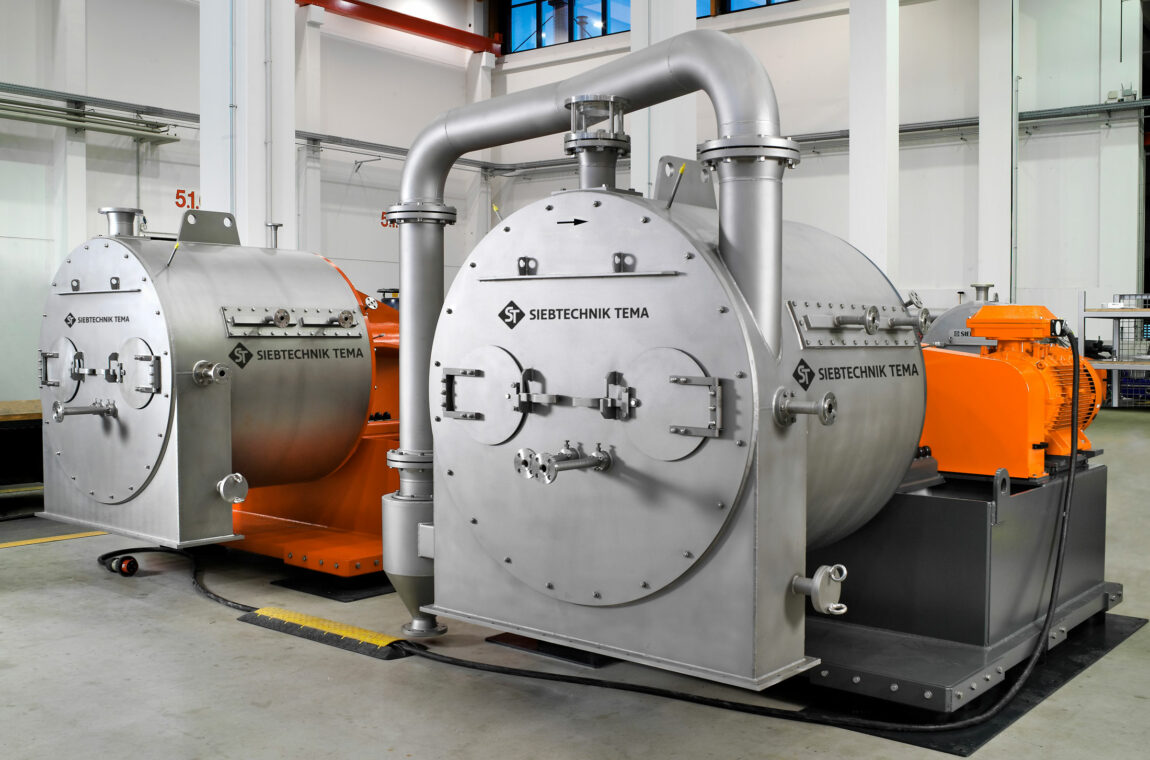
Solid-liquid separation is the critical final step in most ZLD processes, as this is where the remaining water is separated from the solids, in most cases salts. Dewatering is mostly done with decanters, SHORTBOWL decanters, pusher centrifuges and CONTURBEX centrifuges. For dewatering coarse residue, our HSG vibratory centrifuges have proven effective.

Finer mixed salts from crystallization plants are centrifuged using downstream SHORTBOWL decanters, SHS pusher centrifuges and CONTURBEX centrifuges at temperatures sometimes exceeding 100°C. The high-alloy stainless steels, Hastelloy® and titanium materials required for these machines are provided with appropriate wear protection made of tungsten carbide, Stellite® or ceramic tiles.

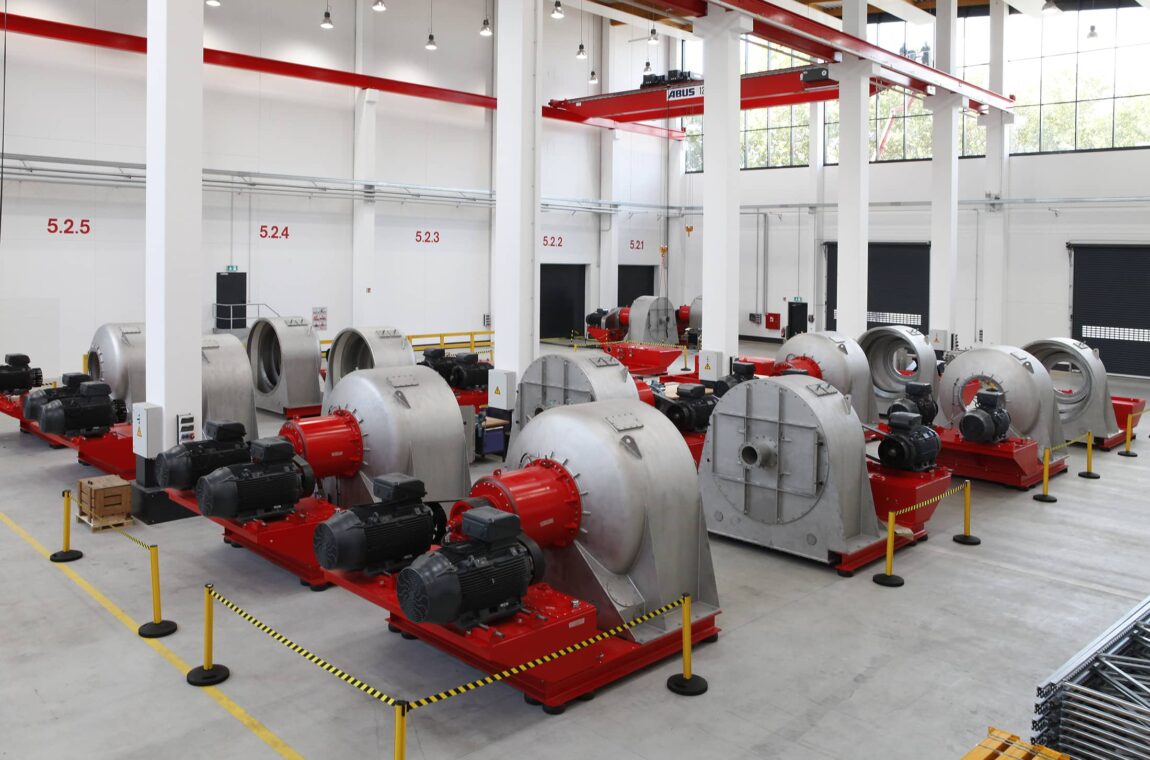
SIEBTECHNIK sieve screw centrifuge CONTURBEX H700 for lactose - hall view with several machines
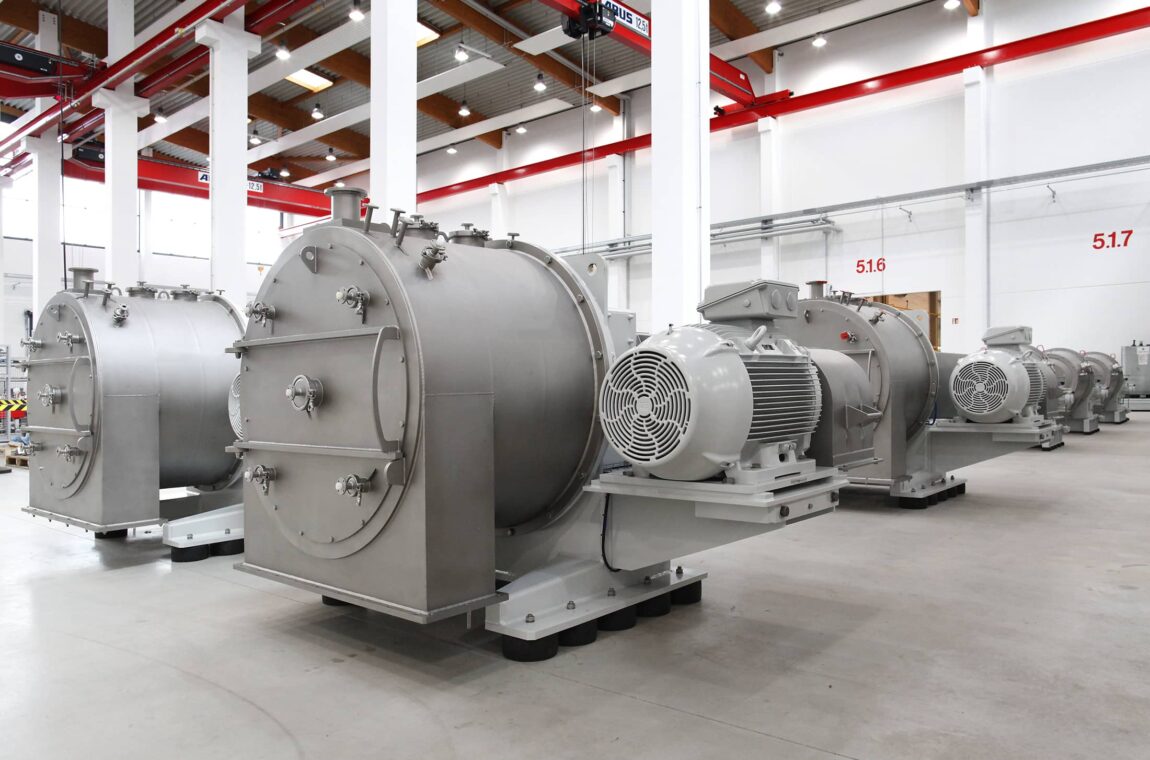
14 STK SIEBTECHNIK TEMA sieve screw centrifuges type CONTURBEX in various stages of completion at the centrifuge technology center in Mülheim an der Ruhr
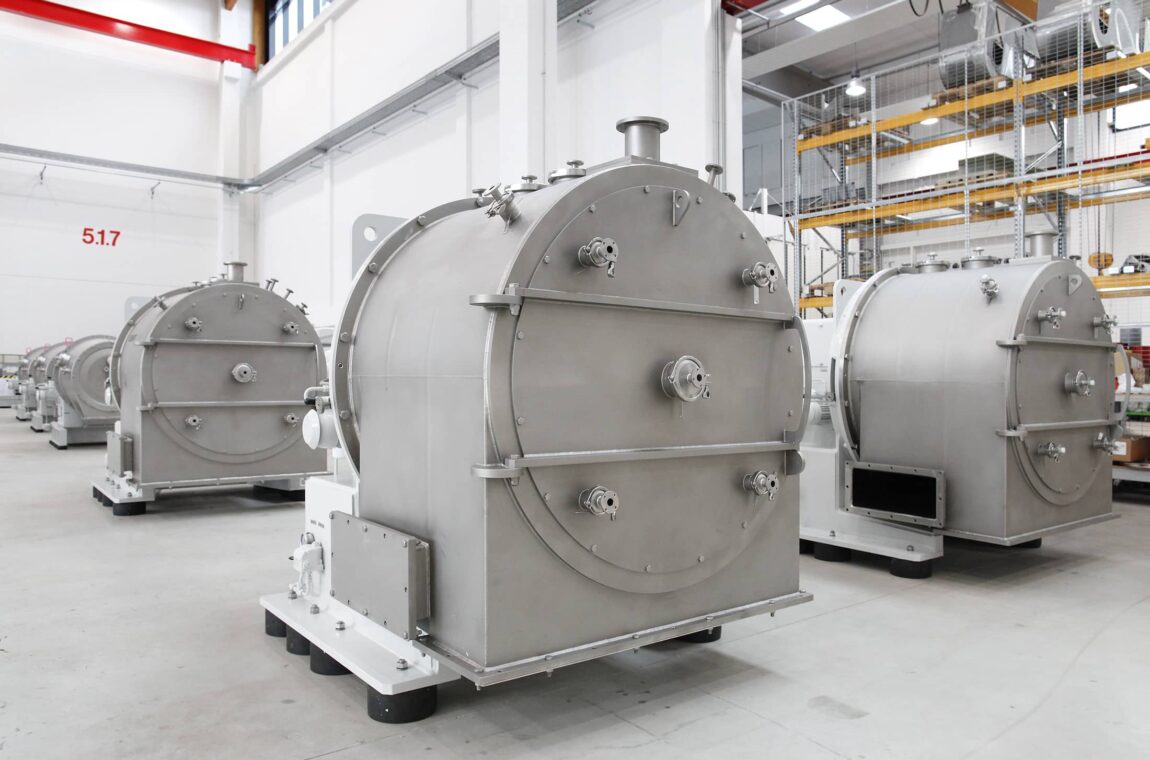
SHS pusher centrifuge for sodium sulphate in the factory hall in Mülheim an der Ruhr

Protection anti-usure

Les centrifugeuses SIEBTECHNIK TEMA sont spécialement optimisées pour chaque tâche de séparation. En matière de choix des matériaux, les aciers inoxydables austénitiques et ferritiques ont fait leurs preuves dans la construction de centrifugeuses destinées à des applications soumises à des contraintes normales.

Pour les procédés impliquant le traitement de matériaux abrasifs, les centrifugeuses doivent être équipées d’une protection efficace contre l’usure. Depuis 1922, nous développons sans cesse des systèmes de protection contre l’usure, en commençant par le traitement du charbon.

Nos centrifugeuses peuvent être équipées de systèmes de protection contre l’usure très sophistiqués, fabriqués notamment en carbure de tungstène, en Stellite® ou en carreaux de céramique, pour n’en citer que quelques-uns. Les revêtements en caoutchouc ou les revêtements matriciels ont également fait leurs preuves dans diverses applications.

Si nécessaire, nos ingénieurs mettent au point des solutions innovantes et performantes dans le domaine des technologies de revêtement, de collage et d’assemblage pour nos clients du monde entier.

Matériaux utilisés pour la fabrication de centrifugeuses

Les composants des centrifugeuses doivent non seulement résister à des forces élevées, mais aussi à des contraintes liées au processus, telles que la corrosion, l’usure et les températures élevées. Le coût et la disponibilité des matériaux jouent également un rôle important. Nos clients choisissent les matériaux en contact avec le produit en fonction de ces exigences très spécifiques.

Les aciers inoxydables duplex et fortement alliés, l’Hastelloy® et le titane, destinés à une grande variété de procédés et de contraintes, font partie intégrante de notre activité quotidienne dans la construction de centrifugeuses. Notre service de gestion de la qualité a mis au point des processus très détaillés et rentables pour la conception, les procédés de fabrication et les essais des composants, conformément aux directives européennes.

Les matériaux couramment utilisés pour la tôlerie et la forgeage des composants en contact avec le produit dans les centrifugeuses comprennent notamment :

  • EN 1.4404 / AISI 316L
  • EN 1.4571 / AISI 316Ti
  • EN 1.4462 / AISI 318LN / Duplex
  • EN 1.4410 / AISI F53 / Super Duplex
  • Duplex épuré
  • EN 1.4539 / AISI 904L
  • EN 1.4547 / 254SMO®
  • EN 1.4529 / AISI 926
  • EN 2.4819 / INCONEL® Alloy C-276
  • EN 2.4602 / Hastelloy® C22
  • EN 2.4610 / Hastelloy® C4
  • EN 3.7035 / Ti-II / Titan 994-Ti-grade 2
  • EN 3.7235 / Ti-IIPd / Titan 994 Pd-Ti-grade 7
  • et leurs matériaux de moulage

Download the full report

Find out more about these applications

SHORTBOWL decanter for lactose in the production hall in Mülheim an der Ruhr

Décanteur centrifuge SHORTBOWL

En raison de la géométrie particulière de ses pièces rotatives, la centrifugeuse à décanteur SHORTBOWL est particulièrement adaptée à la séparation de particules solides fines présentant une différence de densité spécifique importante par rapport à la phase liquide.

En savoir plus

Décanteur centrifuge – solid bowl

Nos décanteurs sont uniques, fonctionnels et polyvalents. Ils permettent une séparation très efficace des particules solides, même les plus fines, et une clarification quasi totale de la phase liquide.

En savoir plus
SHS pusher centrifuge in fertilizer production

Centrifugeuse à poussoir SHS

La centrifugeuse à poussoir SIEBTECHNIK TEMA SHS s'est imposée et a fait ses preuves en tant qu'appareil moderne et performant dans de nombreux secteurs industriels.

En savoir plus
SIEBTECHNIK sieve screw centrifuge CONTURBEX H700 for lactose - hall view with several machines

Centrifugeuses à tamis et vis CONTURBEX

La CONTURBEX est une centrifugeuse à filtration continue qui offre un très large éventail d'applications.

En savoir plus
Oscillating centrifuge HSG

Centrifugeuse vibrante HSG

La centrifugeuse vibrante HSG de SIEBTECHNIK TEMA vous permet de déshydrater en continu, par centrifugation, des matériaux en vrac présentant la plus grande teneur en matières solides au monde.

En savoir plus

Comment pouvons-nous vous aider ?

Nous avons la solution adaptée à chaque tâche. Et si ce n’est pas le cas, nous travaillerons avec vous pour en trouver une. N’hésitez pas à nous contacter !

Nos spécialistes se feront un plaisir de vous conseiller individuellement sur site ou à distance et sont à votre disposition pour répondre à toutes vos questions. Envoyez-nous un message via notre

formulaire de contact

Écrire un e-mail Downloads

Your data is only stored locally in your browser to make it easier to fill out future forms. You can delete it at any time via your browser.

Thank you for your enquiry. You will shortly receive an email with your download link.