Centrifugeuses à tamis et vis CONTURBEX
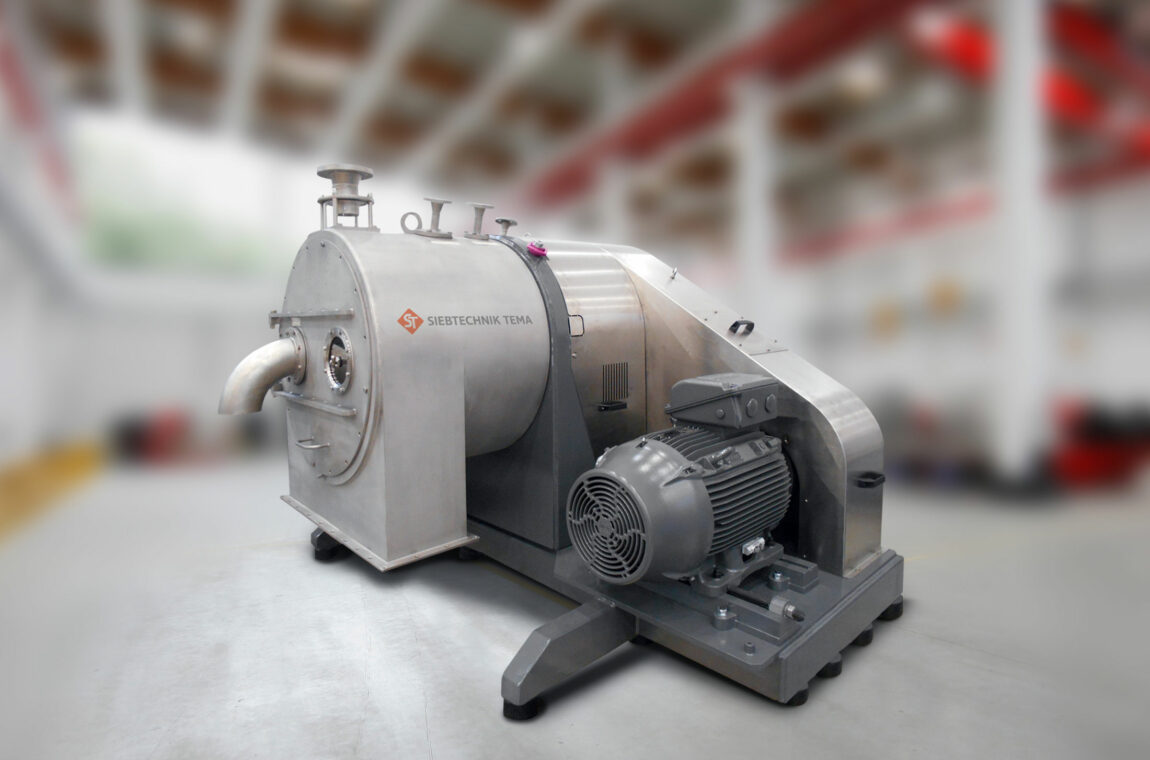
La CONTURBEX est une centrifugeuse à filtration continue qui offre un très large éventail d'applications.


Boric acid has the chemical formula H₃BO₃ and occurs as colorless crystals or as a white powder that dissolves in water. In mineral form, it is known as sassolite.
Boric acid, also known as sassolite, is found in free form mainly in some volcanic areas, such as the Tuscany region of Italy. There, it emerges from fissures in the earth mixed with water vapor.
It is also a component of many naturally occurring minerals such as borax, boracite, ulexite, and colemanite.
Boric acid and its salts are found in seawater. It is also found in plants, including almost all fruits.
Boric acid is used to treat or prevent boron deficiency in plants. It is also used to preserve grains such as rice and wheat. In the food industry, boric acid is used as a preservative under the name E 284.
Boric acid has antiseptic, antibacterial and fungicidal properties. It is used in a highly diluted solution as an eyewash.
The most important industrial application of boric acid is the manufacture of monofilament glass fibers, commonly known as textile glass. Fiberglass is used to reinforce plastics in applications ranging from boats to industrial piping to computer circuit boards. In the construction industry, boric acid and borax and other borates (boron salts) are used in wood preservatives, stains, and flame retardants, as well as in organic insulation materials to prevent mold and pest infestation.
Boric acid is one of the most commonly used substances to counteract the harmful effects of reactive hydrofluoric acid (HF) after accidental skin contact.
Boric acid is used in the production of laurolactam, which is an intermediate (monomer) used in the production of polyamide 12 (nylon 12).


Over 2,000,000 tons of boric acid are produced worldwide each year. It can be produced in several ways. The most commonly used process is the reaction of borax with sulfuric acid. The starting materials react in a reactor at temperatures of about 90 to 95 °C to form boric acid. The resulting solution is filtered.
The solution is then cooled to 15°C and crystallized in a crystallizer. A centrifuge separates the crystalline boric acid from the mother solution, which is returned to the process. The boric acid is then dried and removed for storage.
Boric acid is also a by-product of the production of laurolactam. Laurolactam is an intermediate in the production of polyamide 12 (nylon 12).

Production of Boric Acid – Schematic Representation
Crystal size and particle size distribution are important factors in selecting the right centrifuge for processing boric acid. Boric acid typically has a crystal size of d50 > 200 μm. This makes our CONTURBEX screen scroll centrifuge the ideal machine for this application. If the crystal size is < 150 μm, a decanter with the appropriate particle size distribution can also be used.
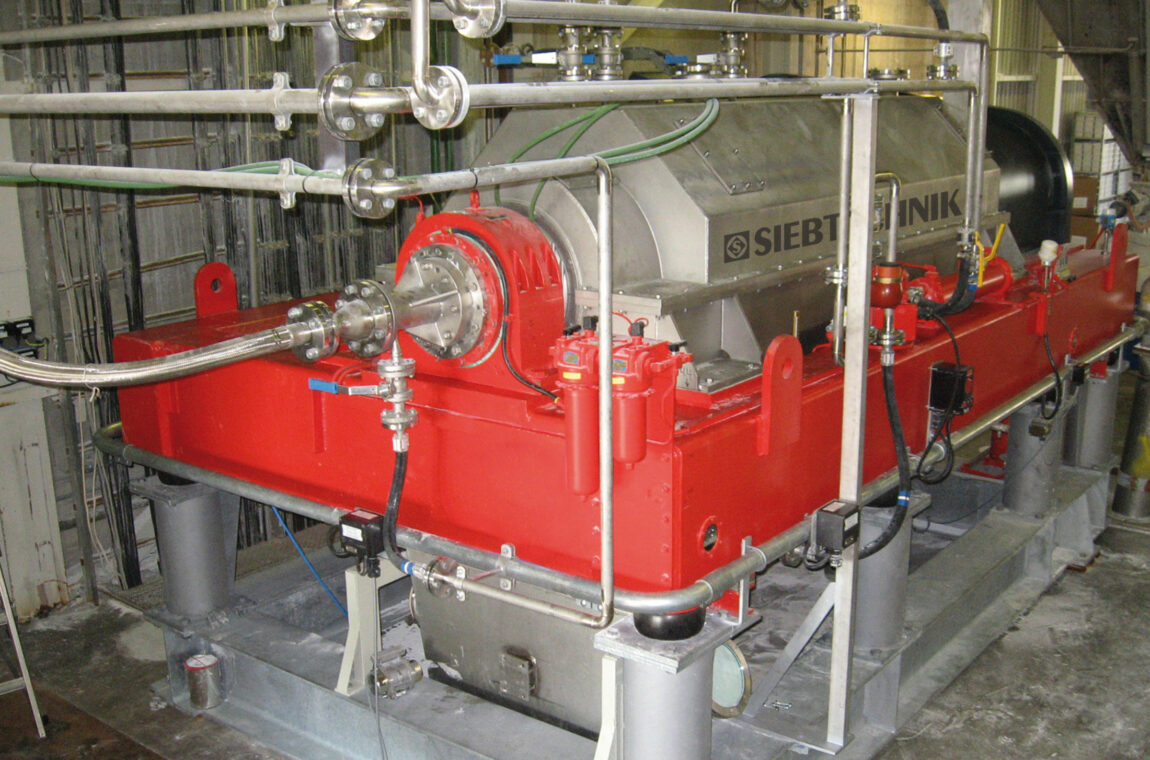
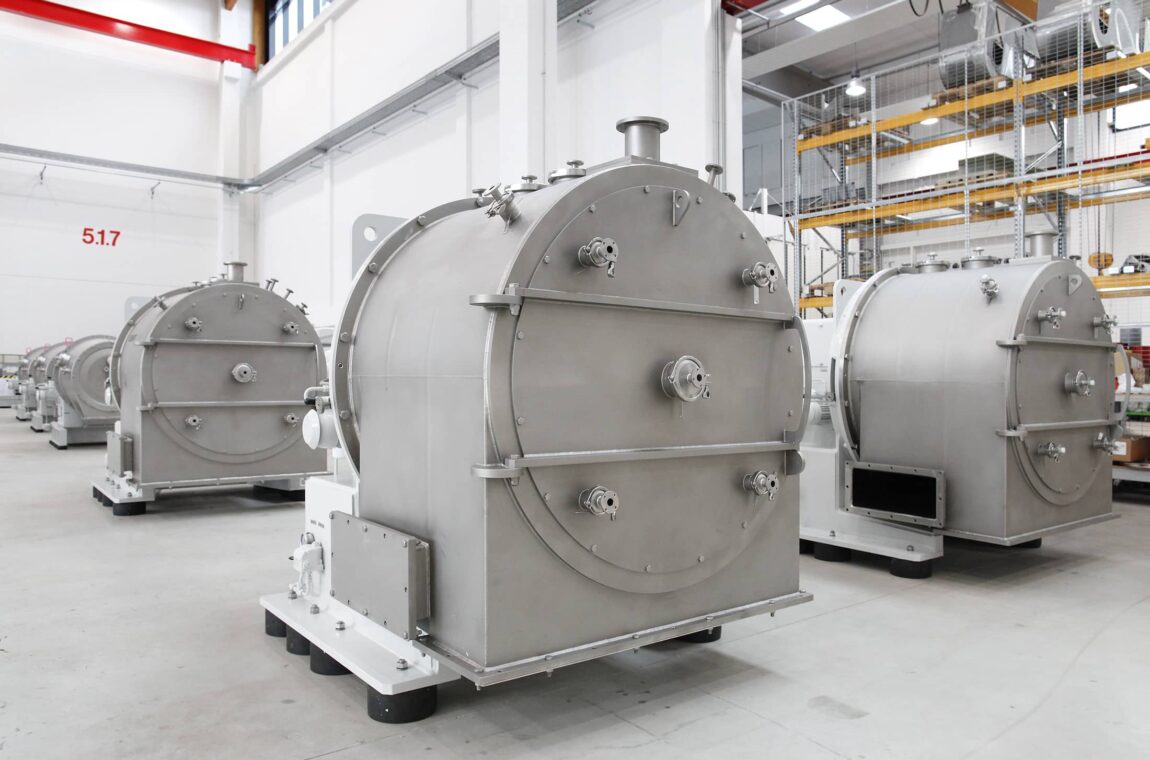
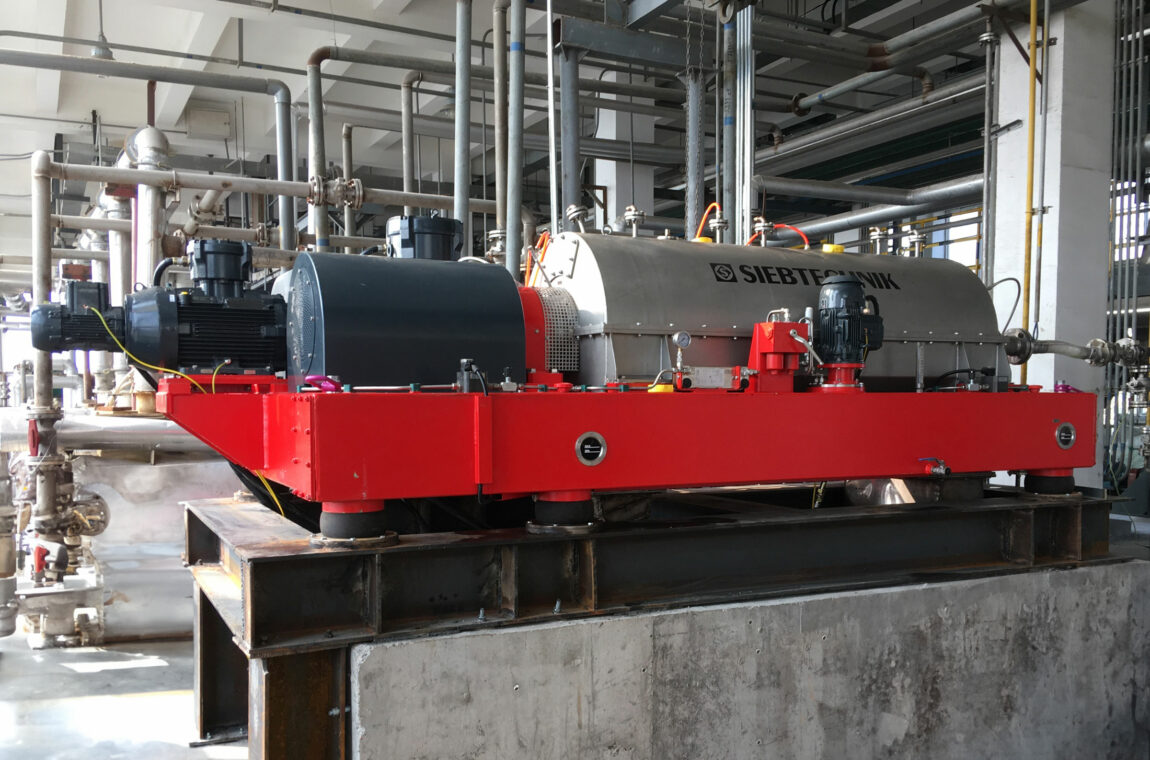
Les centrifugeuses SIEBTECHNIK TEMA sont spécialement optimisées pour chaque tâche de séparation. En matière de choix des matériaux, les aciers inoxydables austénitiques et ferritiques ont fait leurs preuves dans la construction de centrifugeuses destinées à des applications soumises à des contraintes normales.
Pour les procédés impliquant le traitement de matériaux abrasifs, les centrifugeuses doivent être équipées d’une protection efficace contre l’usure. Depuis 1922, nous développons sans cesse des systèmes de protection contre l’usure, en commençant par le traitement du charbon.
Nos centrifugeuses peuvent être équipées de systèmes de protection contre l’usure très sophistiqués, fabriqués notamment en carbure de tungstène, en Stellite® ou en carreaux de céramique, pour n’en citer que quelques-uns. Les revêtements en caoutchouc ou les revêtements matriciels ont également fait leurs preuves dans diverses applications.
Si nécessaire, nos ingénieurs mettent au point des solutions innovantes et performantes dans le domaine des technologies de revêtement, de collage et d’assemblage pour nos clients du monde entier.
Les composants des centrifugeuses doivent non seulement résister à des forces élevées, mais aussi à des contraintes liées au processus, telles que la corrosion, l’usure et les températures élevées. Le coût et la disponibilité des matériaux jouent également un rôle important. Nos clients choisissent les matériaux en contact avec le produit en fonction de ces exigences très spécifiques.
Les aciers inoxydables duplex et fortement alliés, l’Hastelloy® et le titane, destinés à une grande variété de procédés et de contraintes, font partie intégrante de notre activité quotidienne dans la construction de centrifugeuses. Notre service de gestion de la qualité a mis au point des processus très détaillés et rentables pour la conception, les procédés de fabrication et les essais des composants, conformément aux directives européennes.
Les matériaux couramment utilisés pour la tôlerie et la forgeage des composants en contact avec le produit dans les centrifugeuses comprennent notamment :

La CONTURBEX est une centrifugeuse à filtration continue qui offre un très large éventail d'applications.

Nos décanteurs sont uniques, fonctionnels et polyvalents. Ils permettent une séparation très efficace des particules solides, même les plus fines, et une clarification quasi totale de la phase liquide.


Nous avons la solution adaptée à chaque tâche. Et si ce n’est pas le cas, nous travaillerons avec vous pour en trouver une. N’hésitez pas à nous contacter !
Nos spécialistes se feront un plaisir de vous conseiller individuellement sur site ou à distance et sont à votre disposition pour répondre à toutes vos questions. Envoyez-nous un message via notre